

Coinbase Completes Large Internal Wallet Migration to Improve Security
- Coinbase moved large amounts of crypto to new internal wallets.
- The company says this is a routine security practice, not a breach.
- Scammers may use the migration to target users with phishing attempts.
- Experts warn that hackers, AI tools, and future quantum computers increase long-term cybersecurity risks.
- Regular wallet rotation reduces exposure and protects user funds.
Coinbase, one of the largest crypto exchanges in the world, has completed a planned migration of funds to new internal wallets. The company moved major assets such as Bitcoin, Ether, and other tokens to addresses fully controlled by the exchange. According to Coinbase, this activity was not caused by a hack, breach, or outside threat. Instead, it was a routine security procedure designed to reduce long-term exposure from using the same public wallet addresses for too long.
Coinbase explained that periodically migrating funds is considered a best practice in the crypto industry. When wallet addresses remain unchanged for long periods, they become well-known across the blockchain ecosystem. This increases the chance that attackers or sophisticated threat groups will analyze activity and attempt to compromise them. By rotating wallets regularly, Coinbase lowers potential risks and keeps user assets safer.
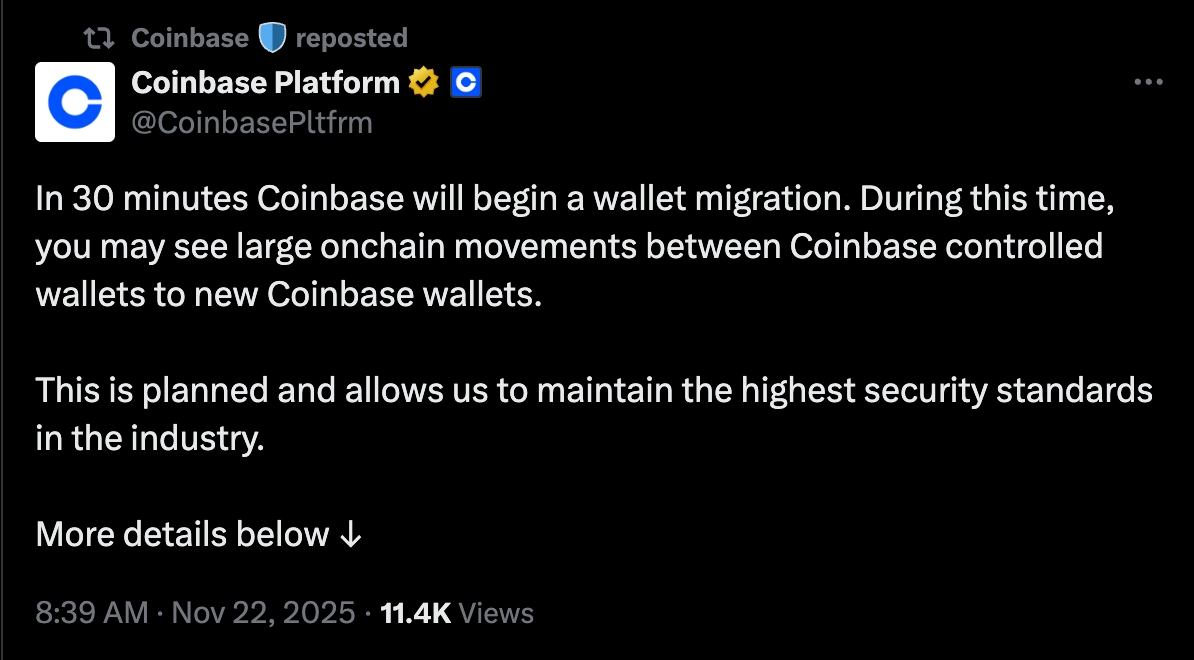
During the migration, Coinbase also warned customers to stay alert for scams. Large on-chain movements often inspire phishing attempts, where scammers pretend to be company staff and try to steal user credentials or convince them to move their funds. Coinbase reminded users that it will never ask for login details, recovery phrases, or manual transfers under any circumstances.
The wider context of the migration highlights how cybersecurity threats in the crypto space continue to evolve. Centralized exchanges hold large amounts of data and tokens, making them prime targets for hackers. Attackers often spend months gathering small pieces of public information, analyzing metadata, or using new AI-powered tools to find weaknesses. These tools help threat actors build accurate profiles and attempt more advanced attacks.
Security experts also warn that quantum computing represents a future risk. While fully capable quantum computers are not yet available to the public, researchers say it is possible that sophisticated actors may already be collecting public keys in preparation for future attacks. Once powerful quantum tools become available, they could theoretically derive private keys from exposed public keys, enabling a “harvest now, decrypt later” strategy.
Because of these rising threats, crypto platforms are encouraged to adopt post-quantum cryptographic standards as soon as possible. Moving funds to new wallets today helps reduce long-term exposure while the industry continues to develop stronger, future-proof security systems.
Overall, Coinbase’s migration is a proactive move meant to protect users and strengthen internal defenses. It reflects the continuous effort required to maintain safety in an industry where both technology and threats evolve quickly.
Final Thought
Coinbase’s large internal migration is not a sign of danger—it’s a sign of preparation. By rotating wallets and warning users about potential scams, the exchange is taking steps to stay ahead of cybersecurity risks. As threats grow more advanced, regular security updates like this will only become more important.