
A16z Leads $12.9M Round for ZAR to Bring Stablecoins to Pakistan
- Andreessen Horowitz (a16z) leads a $12.9 million funding round for fintech startup ZAR, aiming to make stablecoins accessible to Pakistan’s unbanked population.
- Dragonfly Capital, VanEck Ventures, Coinbase Ventures, and Endeavor Catalyst also participated in the round.
- ZAR will use corner stores, kiosks, and money agents to let users swap cash for stablecoins — no blockchain knowledge required.
- The startup targets Pakistan’s 240 million citizens, where over 100 million adults remain unbanked.
- Users can exchange cash for stablecoins via QR code and spend them through a Visa-linked wallet.
- Co-founded by Sebastian Scholl and Brandon Timinsky, the team previously built and sold SadaPay to Papara in 2024.
- ZAR plans to expand to African markets by 2026 if the pilot in Pakistan succeeds.
- The funding coincides with Pakistan’s new digital asset regulations and its rise to 3rd place in global crypto adoption (Chainalysis 2025).
Venture capital powerhouse Andreessen Horowitz (a16z) is backing financial inclusion in emerging markets, leading a $12.9 million investment round for ZAR, a fintech startup that brings dollar-backed stablecoins to millions of unbanked Pakistanis.
Other backers in the round include Dragonfly Capital, VanEck Ventures, Coinbase Ventures, and Endeavor Catalyst, according to a report from Bloomberg on Tuesday.
ZAR, founded just a year ago, is focusing on bridging cash-based economies with digital assets — starting with Pakistan, where over 100 million adults remain unbanked, according to World Bank data.
Instead of focusing on crypto apps or global exchanges, ZAR is taking a grassroots approach. The startup plans to distribute stablecoins through local convenience stores, phone kiosks, and money agents — the same infrastructure used for mobile top-ups and remittances across the country.
This model means users won’t need to understand crypto or blockchain to access stable digital money. They’ll simply walk into a participating shop, scan a QR code, and exchange cash for stablecoins stored in a mobile wallet linked to a Visa card usable worldwide.
ZAR’s app has already launched in Pakistan’s urban centers and is reportedly seeing strong early traction, as it provides a simple bridge from cash to crypto-backed finance.
From SadaPay to ZAR
ZAR was co-founded by Sebastian Scholl and Brandon Timinsky, both of whom previously built SadaPay, one of Pakistan’s most successful mobile wallet startups – later acquired by Turkey’s Papara in 2024.
With this new venture, the founders are targeting the next billion users by bringing stablecoin access to the unbanked, starting with Pakistan and expanding to African markets in 2026, if the pilot phase succeeds.
To date, ZAR has raised $20 million in total funding.
ZAR’s launch comes amid growing government support for crypto regulation in Pakistan. Earlier this year, the government established the Pakistan Virtual Assets Regulatory Authority (PVARA) to oversee the country’s digital asset ecosystem.
In addition, Pakistan recently began inviting international exchanges and virtual asset service providers (VASPs) to apply for operational licenses under a new federal regulatory framework — signaling a shift toward crypto inclusion and legitimacy.
Pakistan’s Crypto Adoption Is Soaring
Pakistan has quickly emerged as a global crypto powerhouse, ranking third in Chainalysis’ 2025 Global Crypto Adoption Index — up six spots from the previous year.
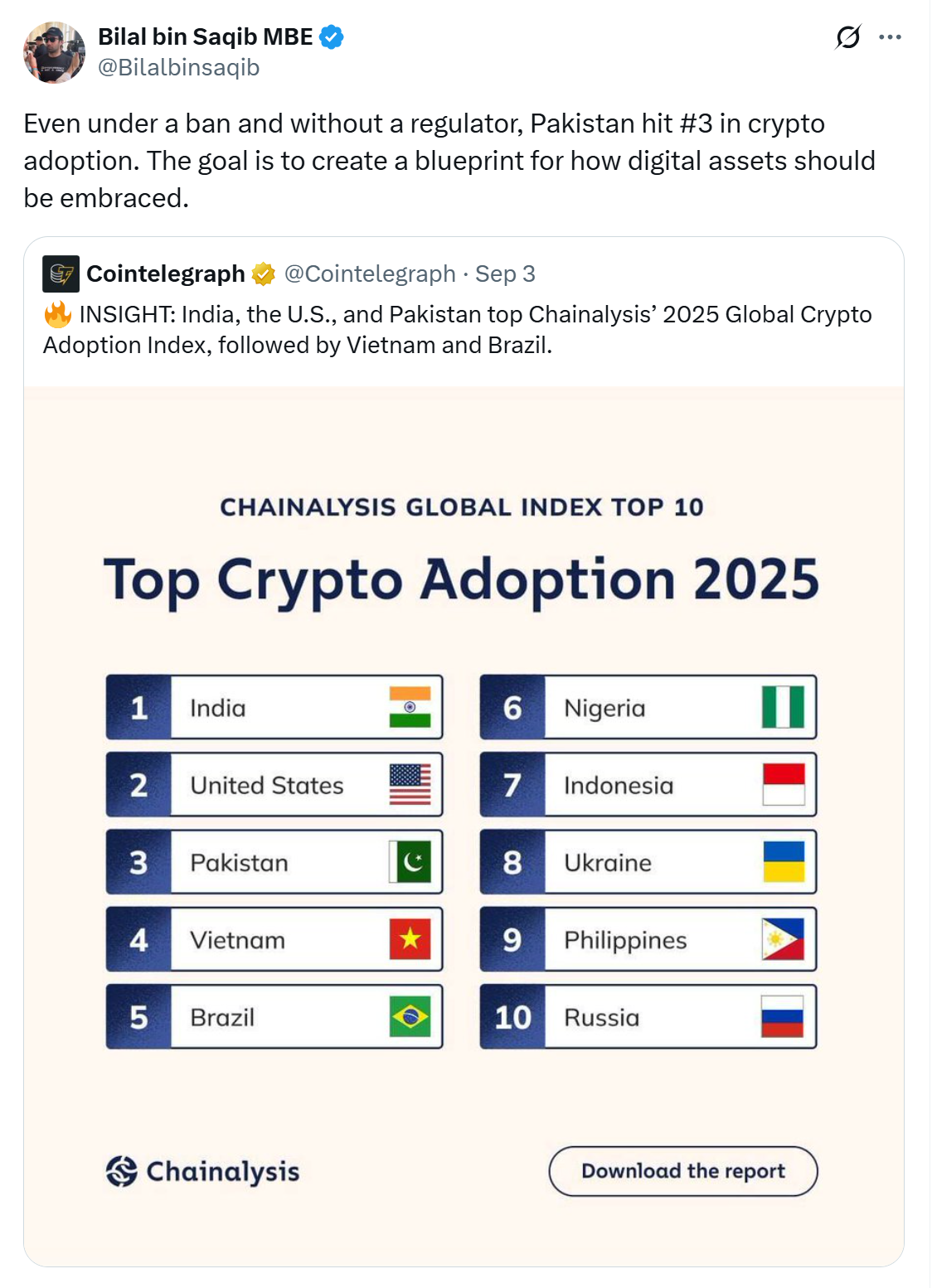
This rapid rise underscores a massive appetite for digital finance, particularly in emerging markets where traditional banking infrastructure is limited.
By leveraging existing cash networks and digital wallets, ZAR could become a cornerstone of Pakistan’s crypto-driven financial transformation, providing stablecoin access to millions who’ve never had a bank account.
For Andreessen Horowitz, this investment marks a strategic expansion into frontier fintech — aligning with its mission to support projects that bring real-world utility to blockchain technology.
By backing ZAR, a16z and its co-investors are betting that stablecoins will become the backbone of emerging-market payments, empowering communities long excluded from the formal banking system.