

Bitcoin Analyst Sees Strongest Risk-Reward Since COVID
Key Takeaways
- Bitwise researcher André Dragosch says Bitcoin hasn’t shown this level of asymmetric risk-reward since March 2020.
- He argues Bitcoin is pricing in a recession despite improving global growth signals.
- Bitcoin is down 17% in 30 days after liquidations, tariffs, and sentiment shocks.
- Analysts say most “bad news” may already be priced in.
- Some traders expect a historical rebound pattern that has preceded rallies 75% of the time.
Bitcoin Is Priced for Recession While Macro Signals Improve
Bitcoin may be entering one of its most favorable long-term setups in years, according to Bitwise Europe head of research André Dragosch. In a post on X, Dragosch said the current environment offers the strongest asymmetric risk-reward profile he has seen since March 2020, when the pandemic crash pushed Bitcoin below $5,000 before it began its explosive recovery.
Dragosch argued that Bitcoin’s recent decline does not align with forward macroeconomic conditions. He said the asset is effectively “pricing in the most bearish global growth outlook since 2022,” a period marked by aggressive Federal Reserve tightening and the collapse of FTX. He noted that Bitcoin now reflects a recession-like environment, even though U.S. Treasury Secretary Scott Bessent recently stated that the United States is not at risk of entering recession in 2026.
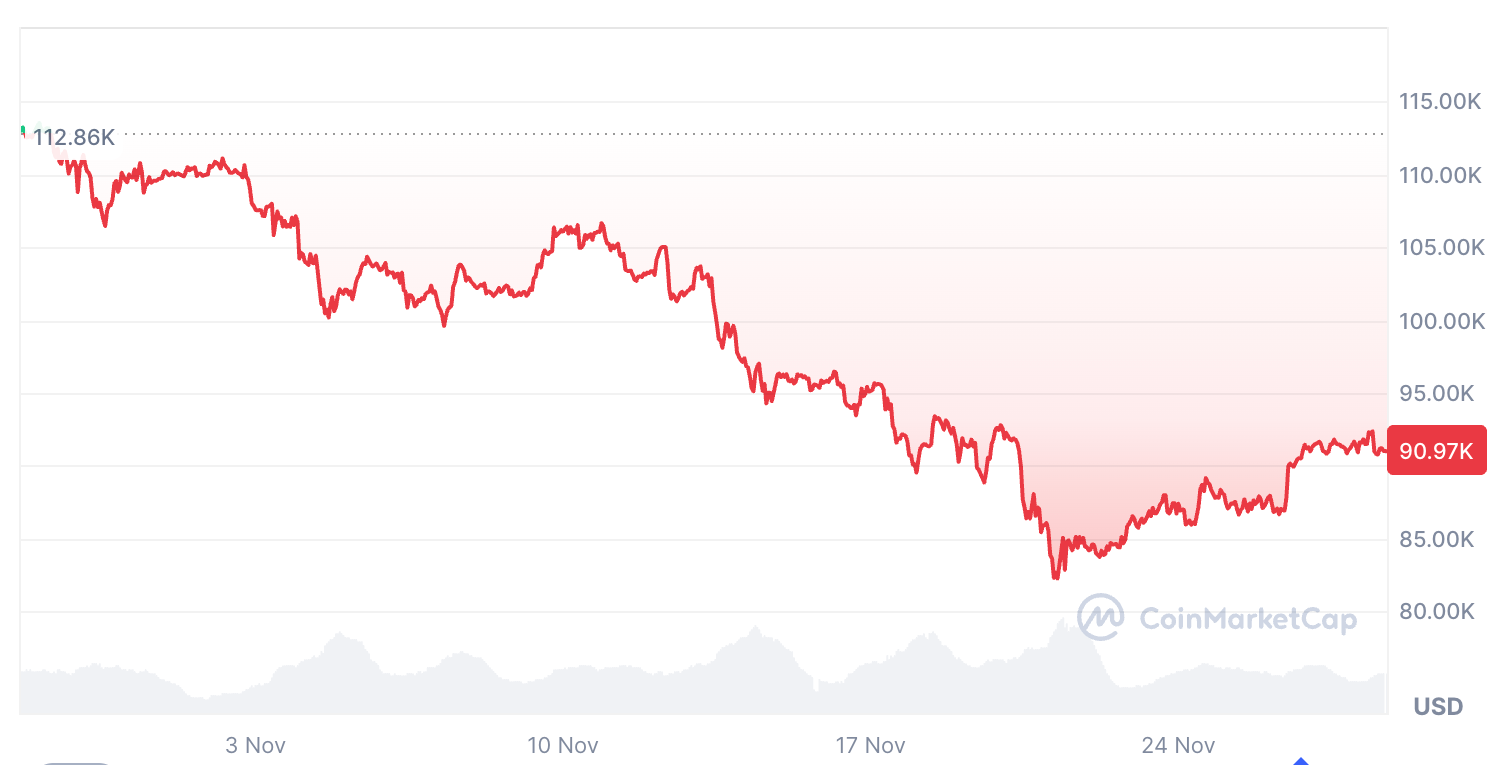
The market has struggled to maintain momentum after hitting a new all-time high of $125,100 on Oct. 5. A $19 billion liquidation cascade on Oct. 10, combined with President Donald Trump’s announcement of 100% tariffs on Chinese goods, pushed Bitcoin into a deeper downtrend. The move below the psychological $100,000 level on Nov. 13 weighed further on sentiment, and while the brief dip under $90,000 sparked fears, the quick rebound helped stabilize the market.
Dragosch believes global growth is likely to strengthen from here, supported by the impact of earlier monetary stimulus. He compared the setup to the COVID-era recovery, saying he sees a similar macro structure forming as conditions improve into 2026.
Analysts Expect a Rebound Rather Than a Prolonged Downtrend
Despite the recent drawdown, several analysts argue that Bitcoin’s pullback does not necessarily signal the start of a long bear cycle. Trader Alessio Rastani told Cointelegraph that the current pattern resembles setups that have historically led to strong rallies roughly 75% of the time.
Other market voices share similar optimism. BitMine chair Tom Lee said he remains confident that Bitcoin will climb back above $100,000 by year-end and potentially push to new all-time highs. While sentiment has been shaken by macro uncertainty, liquidations, and policy shocks, many analysts believe the worst may already be priced into the market.
With improving macro signals and deeply discounted risk expectations, analysts argue that Bitcoin may be setting the stage for one of its strongest asymmetric opportunities since the COVID crash.