
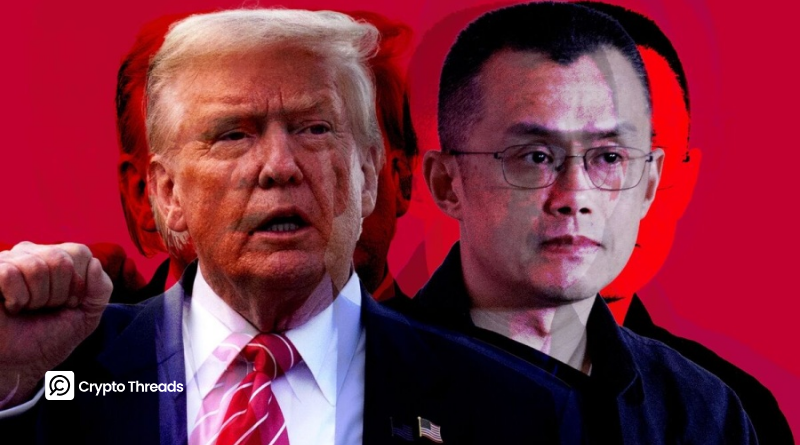
CZ Says He Was Surprised by Presidential Pardon, Denies Any Ties to the Trump Family
- CZ claims he did not expect the presidential pardon and had no direct communication with Donald Trump.
- He says there is no business or financial relationship between himself, Binance, and Trump-linked entities.
- The pardon has divided political and crypto communities, sparking accusations of political favors.
- Democratic lawmakers are calling for further scrutiny and investigation into the decision.
Binance co-founder Changpeng “CZ” Zhao addressed the controversy surrounding his recent presidential pardon, saying he was “somewhat surprised” when the news came through. In an interview with Fox News, CZ explained that although his legal team had submitted a pardon petition months earlier, he had not been given updates or indications about its progress. According to him, the decision arrived unexpectedly and without prior communication from the White House.
CZ also rejected claims that his pardon was influenced by personal or financial ties to the Trump family. He clarified that he has never met or spoken directly with Donald Trump, either before or after the pardon. The only contact he acknowledged was a brief and informal encounter with Trump’s son, Eric, during the Bitcoin Middle East and North Africa conference in Abu Dhabi. CZ insisted that this interaction was casual and unrelated to business.
In response to allegations linking Binance or his personal investments to World Liberty Finance — a project that several Democratic lawmakers have associated with Trump-affiliated circles — CZ stated firmly that no such business relationship exists. He emphasized that neither he nor Binance had engaged in financial deals or agreements with entities tied to the Trump family.
The crypto community reacted positively to the news of the pardon, viewing it as a potential shift away from the previous administration’s more aggressive stance toward crypto enforcement. Many interpreted the decision as a symbolic signal that regulatory attitudes may be loosening under current leadership.
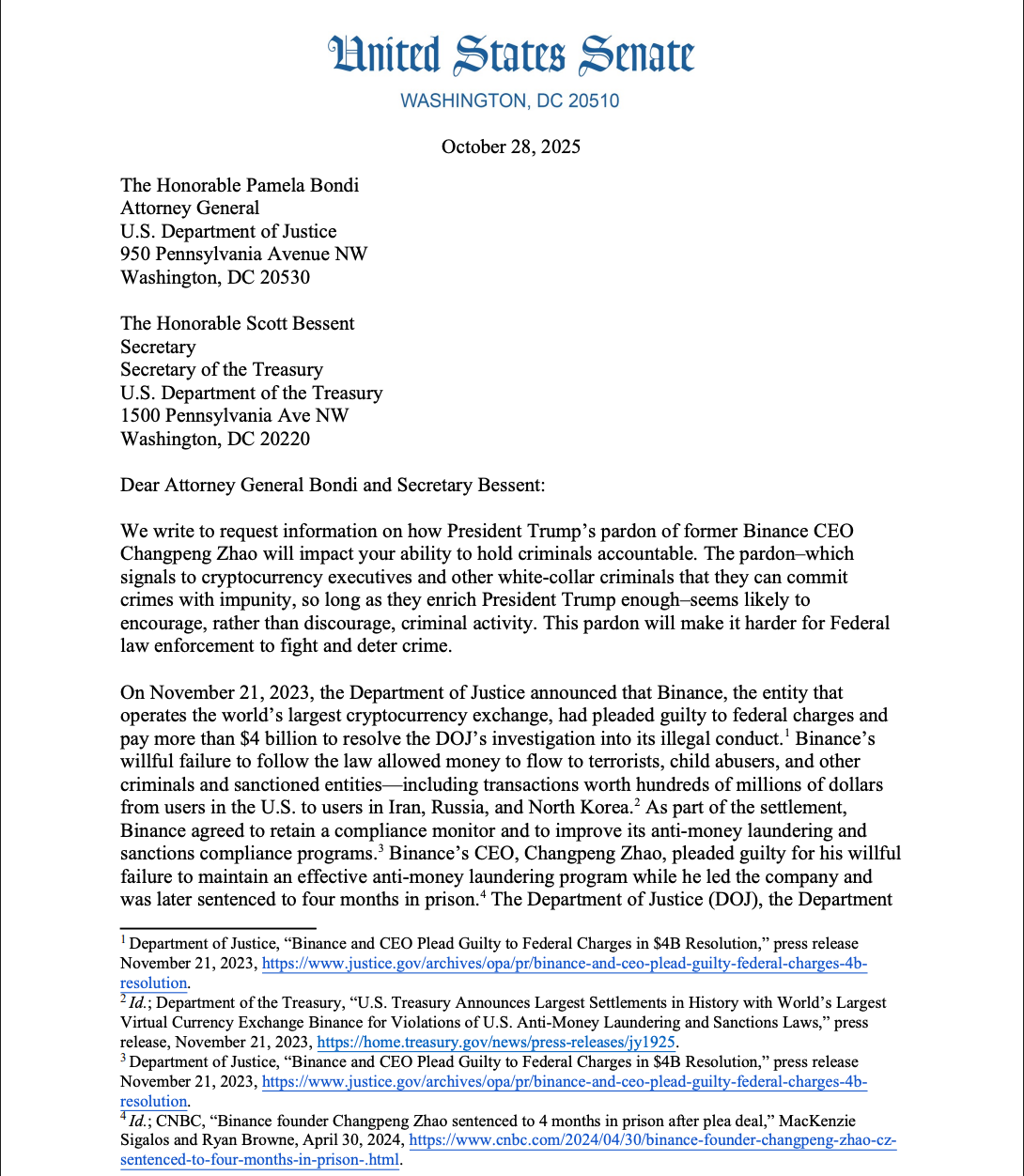
However, critics from the Democratic Party voiced concerns about the pardon’s legitimacy. Lawmakers, including Senator Elizabeth Warren and Senator Bernie Sanders, accused Trump of engaging in “pay-to-play” politics — effectively trading clemency for financial support or influence within the crypto sector. They have since requested formal review and oversight of the circumstances behind the pardon, arguing that transparency is necessary to ensure public trust.
The situation highlights the increasingly political nature of cryptocurrency regulation in the United States. As crypto becomes more integrated into global finance, decisions involving industry leaders are likely to draw heightened scrutiny. Whether the controversy fades or escalates will depend in part on how regulators and lawmakers respond in the coming months.
Final Thought
CZ is attempting to distance himself from claims of political favoritism, but the broader debate illustrates how deeply crypto is now embedded in U.S. politics. The industry’s future may depend not just on market growth, but on navigating shifting political landscapes and regulatory narratives.