
Ledger Considers New York Listing as Revenue Surges on Rising Crypto Hacks
- Ledger is weighing a New York stock market listing as its revenue hits the triple-digit millions in 2025.
- Demand for cold storage hardware wallets is surging amid a record spike in global crypto hacks.
- Ledger currently helps secure $100 billion in Bitcoin for customers.
- The firm may raise capital next year via a private round or public listing.
- A new Ledger multisig app drew backlash due to transaction fee concerns from users.
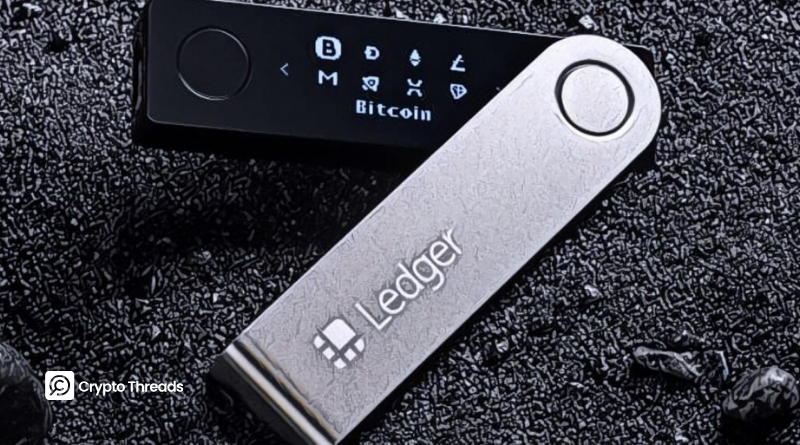
Ledger, the France-based provider of crypto hardware wallets, is evaluating a move to list in New York after experiencing its strongest financial year to date. CEO Pascal Gauthier told the Financial Times that the company has seen revenues climb into the triple-digit millions in 2025, driven largely by a global upswing in crypto-related cyberattacks.
The rise in demand reflects a broader shift in the security priorities of both individual investors and companies holding digital assets. With hackers becoming increasingly sophisticated, many users are moving away from exchanges and hot wallets in favor of offline cold storage solutions. According to Chainalysis data cited in the report, crypto thefts reached $2.2 billion in the first half of 2025, exceeding the total amount stolen in 2024. About 23% of these attacks targeted individual wallets, highlighting vulnerabilities across the retail sector.
Ledger now secures an estimated $100 billion worth of Bitcoin for its customers, positioning it as one of the largest security gatekeepers in the industry. Gauthier suggested that the company is preparing to raise capital in 2026, either through a private funding round or via a public listing in the United States. He emphasized that the financial center of gravity for crypto has shifted decisively to New York, stating that U.S. markets currently offer more robust investor appetite than Europe.
The company, valued at $1.5 billion in 2023, faces competition from other cold wallet providers such as Trezor and Tangem. Yet Ledger maintains the strongest global brand profile in the sector, especially among institutional users.
Ledger recently introduced a new multisignature wallet interface to strengthen asset management options. However, the rollout triggered backlash due to its transaction fee structure, which includes a $10 flat fee per transaction and a 0.05% variable fee on token transfers. Critics argue that the pricing model contradicts the company’s cypherpunk-inspired ethos of user sovereignty. Some developers have gone as far as accusing Ledger of moving toward centralized revenue extraction points within the crypto ecosystem.
As hacking threats continue to escalate and regulatory clarity grows, Ledger’s strategic positioning could influence how mainstream investors approach digital asset custody — especially if the company proceeds with a New York listing.
Final Thought
Ledger’s next phase underscores a broader trend: as crypto matures, security is becoming not just an option but a necessity. Whether the company leans into a public listing or private funding, its trajectory highlights the rising importance of trusted self-custody in a market increasingly shaped by cybersecurity risk.