
South Korea’s Stablecoin Framework Delayed as Regulators Clash Over Banks’ Role
- South Korea’s stablecoin framework is delayed due to disagreements between regulators and the Bank of Korea
- BOK insists banks must own at least 51% of any stablecoin issuer
- Regulators prefer allowing more diverse industry participation
- Three competing stablecoin bills are now under review in the National Assembly
- Debate includes whether stablecoin issuers can pay interest to users
- Tech giants like Naver continue pushing forward with stablecoin plans
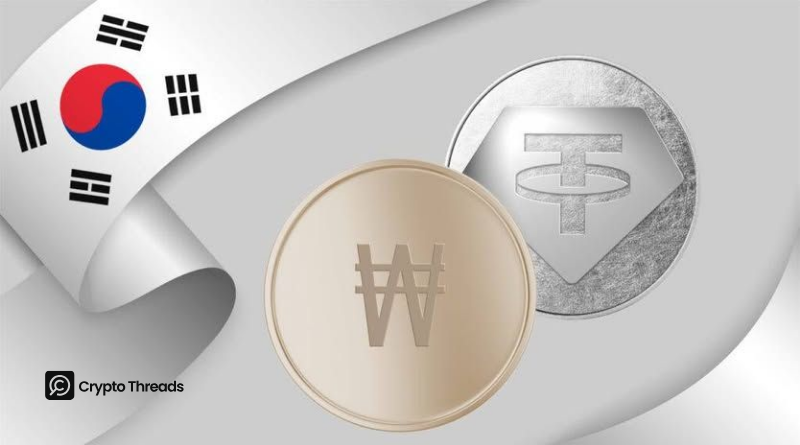
South Korea is expected to finish the year without a clear regulatory framework for stablecoins, as a major dispute between the country’s central bank and financial regulators continues to hold back progress. The Bank of Korea (BOK) and other regulatory bodies are divided over how much control traditional banks should have in the issuance of Korean won-backed stablecoins. The framework, which many expected to arrive by late 2025, is now facing significant delays, according to local reports from the Korea JoongAng Daily.
The BOK believes that banks should take a dominant role in any stablecoin issuer’s corporate structure. Specifically, the central bank says a consortium of banks should hold at least 51% ownership in any company that wants approval to issue stablecoins in South Korea. Regulators, however, argue that stablecoin development should be open to a wider range of industry players, including fintechs and technology firms, to foster innovation. A BOK official said banks are best suited to lead because they already operate under strict oversight, follow anti-money laundering procedures, and have experience handling financial risk.

The BOK warns that giving non-bank companies too much control could create risks for the country’s financial system and foreign exchange markets. According to the central bank, stablecoins function like deposit-taking instruments, meaning that allowing technology companies or industrial firms to issue them would conflict with existing laws that prevent such companies from owning financial institutions. The BOK also cautioned that stablecoins issued by tech companies could cause monopoly concerns and effectively allow non-banks to engage in “narrow banking,” issuing currency and processing payments without traditional oversight.
Meanwhile, lawmakers are considering several proposals as South Korea attempts to develop a stablecoin framework. The National Assembly’s Political Affairs Committee is reviewing three separate bills submitted by both ruling and opposition parties. All three proposals require stablecoin issuers to have at least 5 billion won (around $3.4 million) in capital, but they diverge on key issues, including whether issuers should be allowed to offer interest-bearing stablecoin accounts. One bill permits interest payments, while two others prohibit them, showing how divided policymakers remain on the subject.
Despite the regulatory gridlock, South Korea’s tech sector is moving quickly. Companies like Naver are expanding their stablecoin-related initiatives, encouraged by growing collaboration with major blockchain firms. Reports say Naver Financial is preparing to launch a stablecoin wallet in partnership with Hashed and the Busan Digital Exchange. At the same time, the BOK’s stance aligns with its earlier comments, where Deputy Governor Ryoo Sangdai argued that banks should lead stablecoin issuance starting in 2025. In fact, eight major banks—including KB Kookmin, Shinhan, Woori, Nonghyup, and Citi Korea—are already planning to launch a won-pegged stablecoin in 2026.
With policymakers still debating the role of banks, interest payments, and who should be allowed to issue stablecoins, South Korea’s long-awaited regulatory framework remains on pause. The outcome of this debate will play a major role in shaping the future of the country’s digital currency ecosystem.