
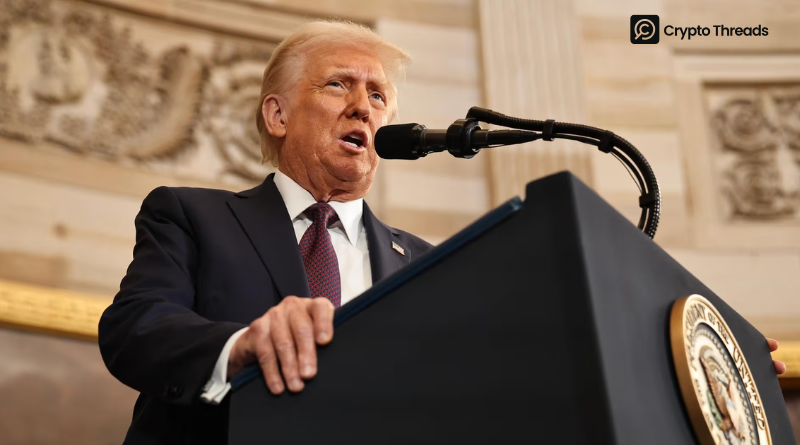
Trump Unveils New Rules for Crypto in the U.S.
Key Takeaway
The newly released report from the Trump White House proposes a regulatory framework for digital assets, emphasizing joint oversight by the SEC and CFTC, enabling banks to offer crypto services, encouraging stablecoin development, and crafting tailored tax rules. It also firmly opposes the creation of a U.S. central bank digital currency.

A Policy Roadmap for U.S. Crypto Leadership
The Trump administration’s Working Group on Digital Assets has published a long-anticipated report outlining its regulatory vision for cryptocurrencies. The document focuses on five core areas: market classification, oversight responsibilities, banking access, stablecoin strategy, and taxation. The aim is to create conditions that foster innovation while maintaining regulatory clarity.

Defining What Crypto Is: Securities vs. Commodities
At the foundation of the report is a proposed taxonomy to distinguish clearly between securities and commodities in the crypto space. This is not just a technical exercise—it determines which agency holds jurisdiction and how projects will be treated under federal law.
The report recommends that the SEC should oversee tokens classified as securities, while the CFTC should regulate spot markets and tokens deemed commodities. This dual oversight model is meant to provide clarity while avoiding regulatory gaps or overlaps. The report stresses that a well-structured market classification is essential to attracting investment and advancing innovation.
Unified Oversight from the SEC and CFTC
Rather than consolidating authority under one agency, the report proposes a collaborative approach between the SEC and CFTC. This structure mirrors how derivatives and traditional financial instruments are currently regulated and is intended to build continuity between traditional finance and crypto markets.
“A rational regulatory framework for digital assets is the best way to catalyze American innovation, protect investors from fraud, and keep our capital markets the envy of the world.”
— SEC Chair Paul Atkins
Modernizing Bank Access to Digital Assets
The report calls for clearer, more flexible rules to allow banks to participate in the crypto ecosystem. Key proposals include allowing banks to custody digital assets and provide crypto-related services, and simplifying the process to obtain a bank charter for digital asset businesses. These steps aim to eliminate regulatory bottlenecks and foster competition between traditional financial institutions and crypto-native firms.
Stablecoins as a Strategic Tool for Dollar Dominance
Stablecoins are positioned in the report as a critical tool for preserving the U.S. dollar’s role in the global financial system. The report highlights their utility, including the ability for issuers to freeze or seize assets in cooperation with law enforcement—something not possible with many decentralized alternatives.
Despite their similarities to central bank digital currencies, the report firmly rejects any U.S. CBDC initiative. It explicitly endorses the CBDC Anti-Surveillance State Act and urges Congress to block any research or development in that area. This reflects a belief that the private sector should lead digital innovation, while the government focuses on oversight rather than currency issuance.
Crypto Taxation Requires Tailored Rules
The report also recommends a custom tax framework for digital assets, recognizing that existing securities and commodities rules do not fully account for crypto-specific behaviors like staking.

It proposes defining digital assets as a new asset class and applying modified versions of current tax codes that better suit the crypto sector. This would provide long-overdue clarity for both individual investors and institutions, reducing ambiguity around reporting requirements and taxable events.
Conclusion
This report marks a strategic shift from fragmented rulemaking toward a structured, market-driven approach to crypto regulation. By promoting clear agency roles, modernizing banking access, supporting stablecoin development, and rejecting a state-run CBDC, the Trump administration positions the U.S. to lead the future of global digital finance.